

If your child’s myopia prescription keeps climbing year after year, you’ve probably started looking into options beyond glasses. Orthokeratology, also known as ortho-k, comes up often in those conversations, and so does the question of whether it’s safe for children.
Many parents want to understand this before moving forward with treatment for their kids. In this blog, we cover how ortho-k works, what the research says about safety, and what parents should consider before starting myopia management with ortho-k lenses.
What is ortho-k?
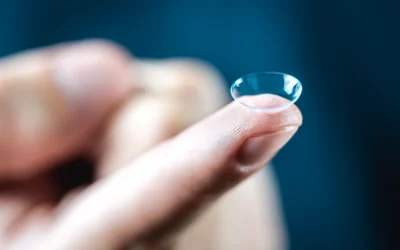
Ortho-k lenses are specially designed rigid contact lenses worn overnight to gently reshape the cornea.¹ Kids take them out when they wake up in the morning, and the reshaped cornea allows the child to see clearly throughout the day without glasses or daytime contacts.
The corneal reshaping effect is temporary, and the process is entirely reversible. If the child stops wearing ortho-k lenses, the cornea gradually returns to its original shape.
Ortho-k has also gained recognition as an effective myopia management tool, not just a vision correction option. Current research suggests ortho-k slows myopia progression by around 50% compared to children wearing standard glasses or contact lenses.²
What does the research say about safety?
Researchers have studied ortho-k extensively in children, and the evidence supports its safety and effectiveness for myopia management when an experienced eye doctor oversees treatment.
The most commonly cited risk is microbial keratitis—a corneal infection that can occur with any contact lens wear. Studies show the risk is low when patients follow proper lens care protocols consistently.³ The risk increases significantly when children don’t follow proper lens care, wear their lenses longer than directed, or miss scheduled follow-up visits.
In short, ortho-k is safe for most children, but that safety depends heavily on proper fitting, consistent care, and regular monitoring.
Who is a good candidate for orthokeratology?
Not every child is a good candidate for orthokeratology. At Pittsburgh Primary Eyecare, our myopia management specialists, Dr. Dorna Javadi and Dr. Erinn Tolomei, evaluate several factors before recommending treatment, including:
- The degree of myopia and whether the prescription is still changing
- Corneal shape and eye health
- The child’s maturity and ability to handle and care for lenses responsibly
- Family commitment to follow-up appointments and hygiene routines
Ortho-k generally works best for children with mild to moderate myopia, though some higher prescriptions may also respond well depending on corneal measurements.
What parents should know about ortho-k lens care
The single most important factor in ortho-k safety is lens hygiene. Children and parents need to take the care routine seriously from day one. That includes:
- Washing and drying hands thoroughly before handling lenses
- Cleaning lenses with the recommended solution after each use
- Never rinsing lenses or the case with tap water
- Replacing the lens case regularly
- Attending every scheduled contact lens exam
Skipping steps in the care routine is where problems tend to develop. Families who stay consistent with hygiene and follow-up tend to have the best outcomes.
What to expect at the start of treatment
Most children adapt to ortho-k lenses within the first one to two weeks. Vision may not be perfectly clear immediately because the cornea needs time to respond to the reshaping process. Mild awareness of the lenses during the first few nights is normal and typically resolves quickly.
Regular follow-up visits during the early stages of treatment help our optometrists ensure the lenses fit correctly, monitor the cornea, and make adjustments as your child’s eyes adapt.
Find out if your child is a candidate for ortho-k
Ortho-k offers a safe, effective, and reversible way to manage myopia progression while providing clear daytime vision without glasses. Our expert team at Pittsburgh Primary Eyecare provides comprehensive pediatric eye exams and ongoing monitoring to support the best possible outcomes for each patient.
Schedule an appointment today to find out whether ortho-k is the right fit for your child.
References:
- What is orthokeratology? aao.org
- Orthokeratology to control myopia progression: a meta-analysis. pubmed.ncbi.nlm.nih.gov
- The risk of microbial keratitis with overnight corneal reshaping lenses. pubmed.ncbi.nlm.nih.gov